
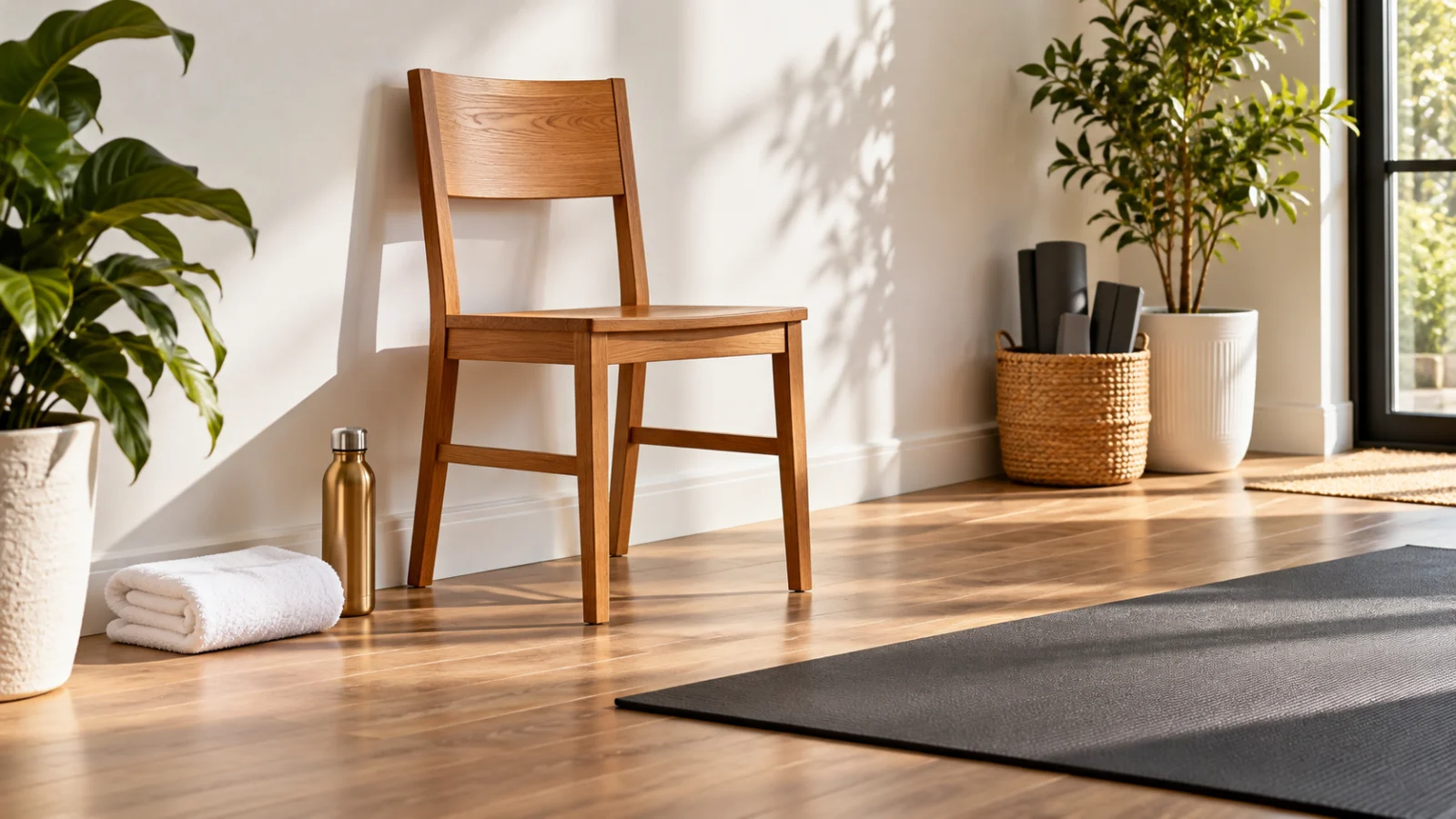
A stable chair can support a modest home practice, but its presence does not make every movement suitable. This example combines a few controlled actions with generous time for rest and setup. Allow roughly fifteen minutes, including pauses. It is general education for adults who can use the selected movements comfortably, not rehabilitation or an individually assessed program.
Check the chair and your starting position
Use a solid chair without wheels on a surface where it will not slide. Sit with feet supported on the floor. Confirm that the seat height and available space work for you. If standing from the chair is unsafe or uncertain, do not improvise; ask an appropriate professional about a suitable variation.
Begin with a few minutes of easy comfortable movement, such as gentle seated marching if suitable. Keep breathing normally and avoid rushing into repetitions. You may remain seated or shorten the practice according to your needs and professional advice.
Practice two basic actions
For a sit-to-stand, start near the front of the seat with feet comfortably apart. Lean forward slightly, rise slowly with control and sit back down deliberately. Try up to five comfortable repetitions, stopping earlier if needed. Hand support may be required; if the movement cannot be controlled, seek a different appropriate exercise.
For a supported heel raise, stand behind the stable chair and use its back for support. Lift the heels only through a comfortable range and lower them slowly. Try up to five repetitions. Keep the support rather than removing it to create a balance challenge.
Rest and decide whether to repeat
Pause between actions until breathing and comfort allow another suitable movement. One round may be enough. A second round is optional only when the first remains comfortable and controlled; the fifteen-minute label is not a requirement to fill every minute with work.
Do not add weights or speed before understanding the basic movement. Stop for pain, dizziness or concerning symptoms and obtain appropriate help. An article cannot assess fall risk or determine whether a medical condition changes the exercise choice.
Review what you learned
Record the chair setup, assistance needed and any question for a qualified instructor or clinician. The useful outcome may be recognizing that a different seat height or supervised introduction is necessary.
Key takeaway: chair-supported practice should prioritize stability, control and appropriate assistance. A small number of suitable repetitions is more useful than completing a generic count through strain. This example has not been individually assessed for the reader.
Sources & further reading
Source review: October 29, 2026. General educational information, not individualized medical advice, professional instruction or a clinical review. Follow appropriate individual guidance. Recipes are not kitchen-tested; timing and yields are estimates.