Meal preparation should make food easier to use safely, not create a refrigerator full of containers with uncertain dates. Start with the meals you expect to need, the storage available and the time before they will be eaten. A modest plan can be more useful than preparing a large batch merely because it looks efficient in a photograph.
Match the batch to real demand
Review the coming schedule and identify a few useful components. Consider whether a no-cook option, a freshly prepared meal or a small batch best fits each day. Do not assume that every recipe has the same storage life or that a closed container makes any food safe indefinitely.
Keep ingredients and allergens in view, especially when preparing food for more than one person. A shared preparation session can require separate utensils or a different approach for allergies and other needs. Ask rather than assuming a general healthy label establishes suitability.
Make refrigeration measurable
FDA guidance recommends keeping the refrigerator at 40°F (4°C) or below and using an appliance thermometer to understand its actual temperature. Avoid overpacking so cold air can circulate. A dial position alone does not tell you the food's storage temperature.
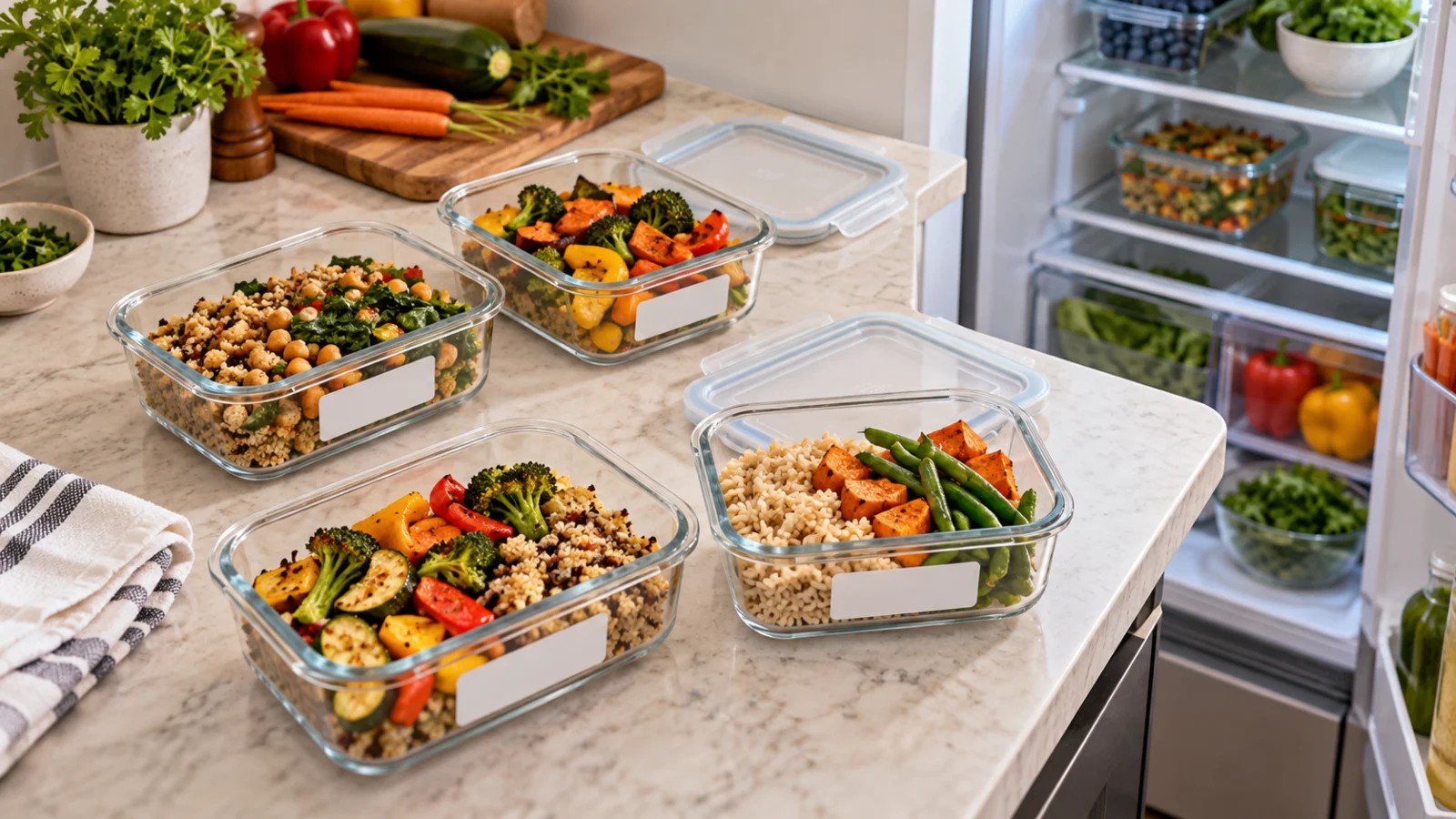
Divide appropriate cooked leftovers into shallow containers and refrigerate promptly. Follow the two-hour limit, reduced to one hour when conditions exceed90°F (32°C). Do not leave a large batch on the counter for an extended cooling period or rely on smell to reconstruct its temperature history.
Label the decision, not only the container
Record what the food is and when it was prepared, then use the relevant authoritative storage guidance and recipe instructions. Different foods have different limits. FoodSafety.gov's chart provides useful categories; it does not mean every mixed recipe can be kept for the longest period shown anywhere on the page.
Plan a conservative use order and freeze suitable portions when appropriate. Follow safe thawing and reheating guidance rather than assuming a microwave's warm exterior proves the entire portion is ready. Reheated leftovers should reach165°F (74°C)throughout.
Keep preparation manageable
Choose a few components you can store, identify and use confidently. Review what was actually eaten before expanding the next batch. Waste or forgotten containers are information about the plan, not a reason to prepare even more.
Key takeaway: safe storage is part of meal preparation from the beginning. A useful batch has a realistic destination, appropriate temperature handling and a clear use plan. No productivity claim should override food-safety limits or individual dietary needs.
Sources & further reading
Source review: October 29, 2026. General educational information, not individualized medical advice, professional instruction or a clinical review. Follow appropriate individual guidance. Recipes are not kitchen-tested; timing and yields are estimates.