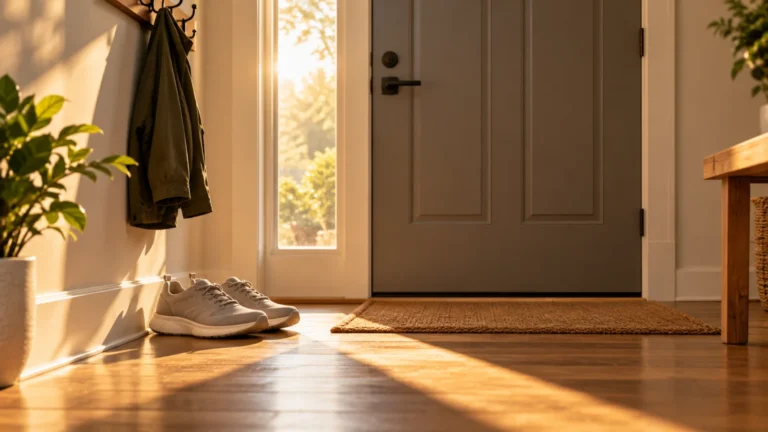
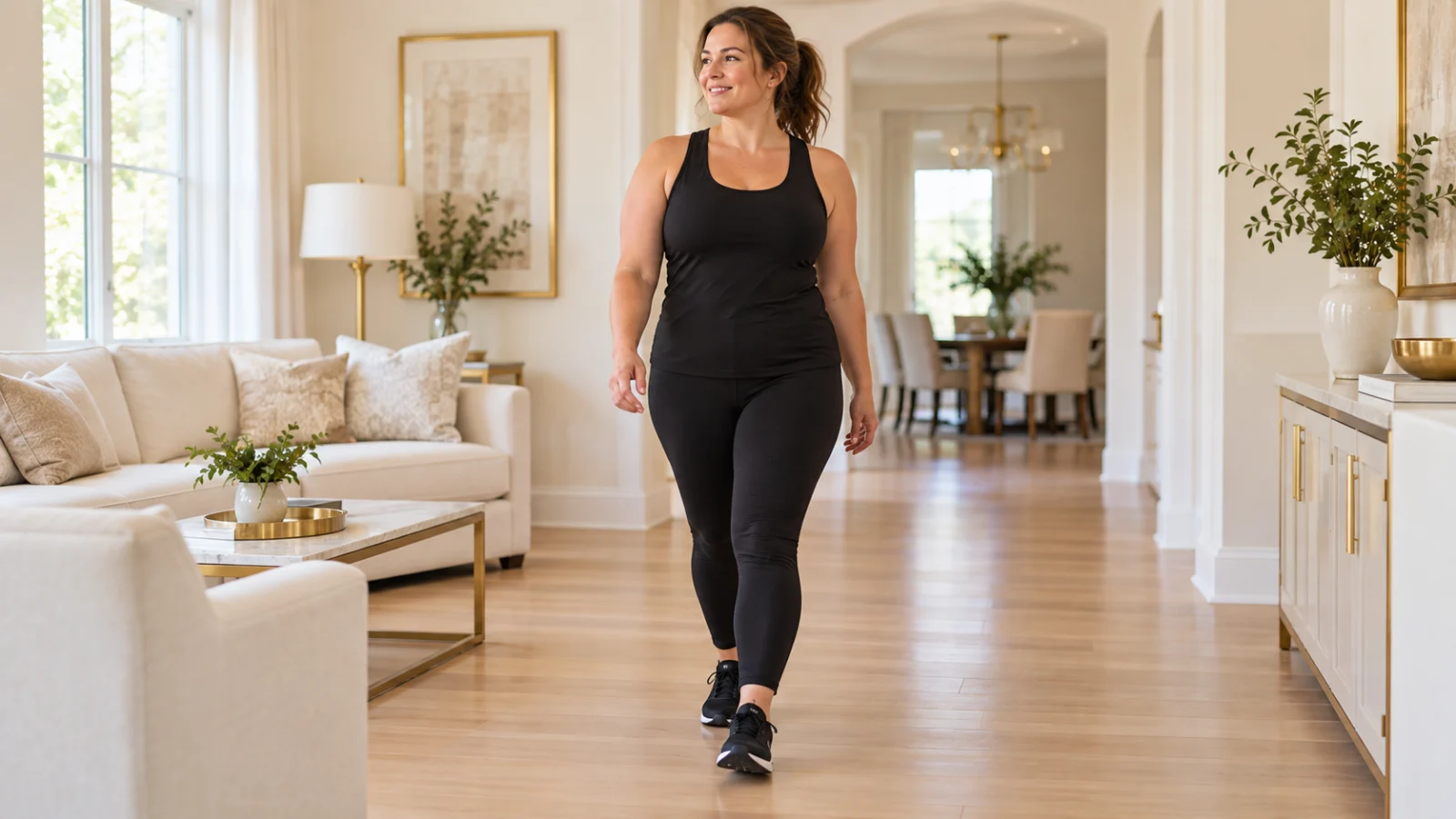
Indoor walking can reduce the setup needed for a short movement session. You still need suitable space, an appropriate starting pace and the freedom to stop. This ten-minute example is an optional beginner structure, not a medical prescription or a test of fitness. Its purpose is to make an ordinary activity easier to organize when outdoor conditions or time are inconvenient.
Prepare a clear route
Choose a level, uncluttered area with enough room to turn without rushing. Remove loose obstacles and avoid walking near stairs, wet surfaces or moving pets. Wear suitable footwear for the surface. If balance, mobility or another health concern makes the route uncertain, obtain appropriate guidance before using it.
Keep a stable support available where needed, but do not use furniture that can roll or slide. A small route should not require rapid pivots. Slow deliberate turns are preferable to trying to maintain a speed through every corner.
Use a simple three-part session
Spend the first two minutes walking gently at a comfortable pace. Continue for about six minutes at a suitable steady pace, slowing whenever conversation or comfort indicates that you should. Finish with two easier minutes. These times are a planning example; extra rests or a shorter session are acceptable.
Do not add jogging, jumping or high knees to make the session count. CDC's talk-test guidance can help describe aerobic effort, but it does not establish medical safety. Keep the pace within your current ability and any individual instructions you have received.
Adapt the plan without forcing it
If ten minutes is more than is suitable, start with a shorter comfortable period. If turning is awkward, consider another appropriate setting or seek a supported alternative. A seated movement option serves a different purpose and should not be treated as identical to walking.
Stop for pain, dizziness, chest discomfort or unusual severe breathlessness. Seek appropriate assistance rather than using the timer as a reason to continue. Immediate danger requires emergency care, not a workout adjustment from a website.
Record one useful observation
Afterward, note whether the route, footwear and timing worked. You may discover that moving a chair creates more space or that a quieter time of day reduces interruptions. Keep the next change modest instead of immediately doubling duration and pace.
Key takeaway: a short indoor walk can be organized simply while preserving judgment and flexibility. The session is a starting structure for suitable adults, not a promise of calorie expenditure, weight change or a complete weekly program.
Sources & further reading
Source review: October 29, 2026. General educational information, not individualized medical advice, professional instruction or a clinical review. Follow appropriate individual guidance. Recipes are not kitchen-tested; timing and yields are estimates.