
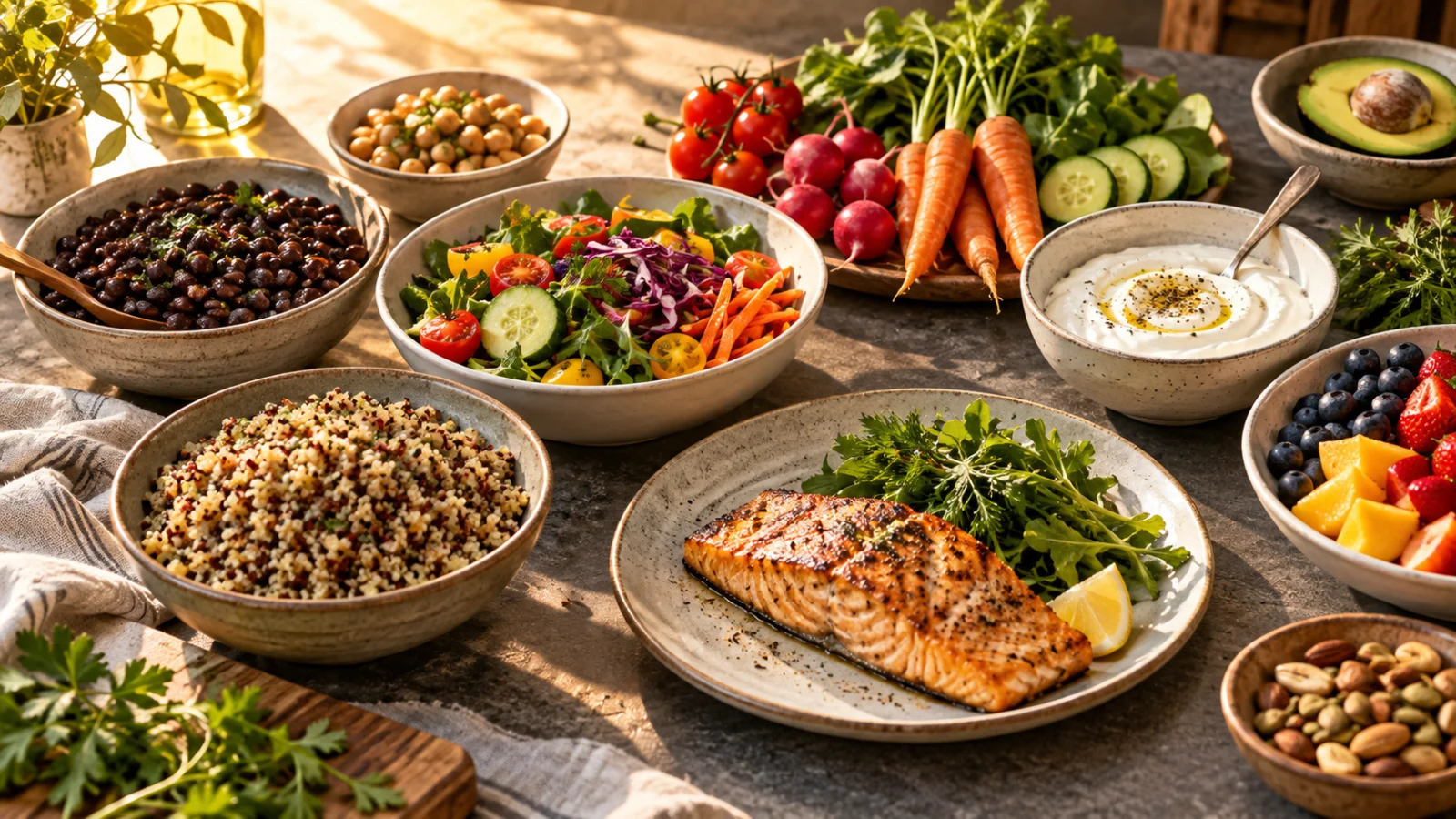
An eating pattern is shaped by repeated choices, access, preferences and individual needs. One attractive meal does not establish the quality of the whole pattern, and one inconvenient day does not erase it. Begin with practical questions about the foods available and the routines that make them easier to use. This is general education, not an individualized diet or medical nutrition plan.
Look at the week with context
Notice which meals are easy to arrange and where the routine becomes difficult. Work hours, budget, culture, storage and cooking facilities affect the options. Avoid judging a person's choices without understanding those circumstances or presenting an expensive shopping list as a universal solution.
CDC's current healthy-eating overview emphasizes a variety of nutrient-containing foods and limiting unnecessary added sugars. Use current primary guidance rather than assuming an old graphic remains the latest national recommendation. Individual conditions, allergies and treatment plans may require advice from an appropriate clinician or registered dietitian.
Make one useful adjustment
Choose a manageable opportunity, such as keeping an appropriate fruit available or planning a simple meal before a busy evening. An adjustment should solve a real obstacle rather than create several new rules. There is no need to eliminate every preferred food to demonstrate seriousness.
Evaluate the actual ingredients and portions in context. A label such as natural, clean or fitness does not explain a food's composition or establish that it meets your needs. Do not turn general guidance into a claim that one ingredient guarantees health or another must always be feared.
Keep preparation realistic
Use foods and methods you can manage safely with the available time and equipment. A no-cook option may be more practical than a complicated recipe on a particular day. Safe storage and label checks remain necessary even for a simple meal.
If you are comparing packaged options, read the serving information and relevant nutrients rather than relying only on front-of-pack promotion. Do not invent precise totals for a homemade meal without suitable ingredient data and clear calculation assumptions.
Review what is sustainable
Ask whether the change is useful, affordable and repeatable. Seek professional help when eating concerns, medical needs or restrictive patterns make general advice insufficient. This publication does not diagnose a condition or promise a particular weight outcome.
Key takeaway: a workable eating pattern is built through informed repeated decisions, not perfect presentation. Variety, practical access and individual context deserve more attention than a dramatic meal label or an all-or-nothing rule.
Sources & further reading
Source review: October 29, 2026. General educational information, not individualized medical advice, professional instruction or a clinical review. Follow appropriate individual guidance. Recipes are not kitchen-tested; timing and yields are estimates.