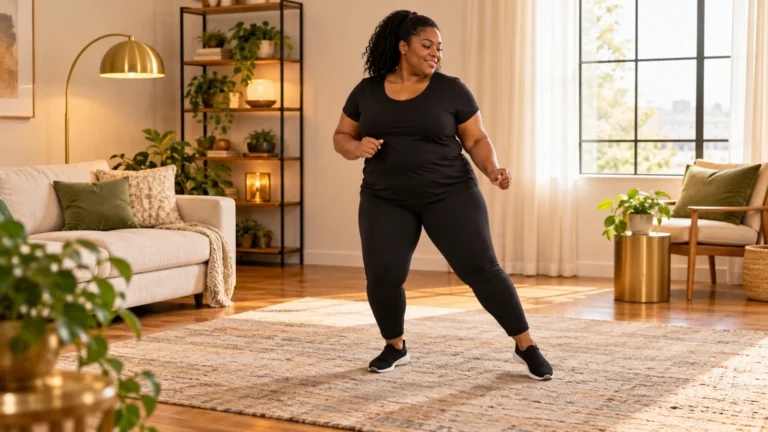
A wall push-up is one possible variation for learning an upper-body pushing movement. It still requires suitable positioning, a secure surface and an appropriate range. This roughly fifteen-minute practice includes setup, easy preparation, a small number of repetitions and rest. It is not a universal starting exercise or an individual assessment of shoulder, wrist or heart health.
Check the surface and position
Use a solid unobstructed wall and a floor where your feet will not slip. Stand facing it at a comfortable distance and place your hands near chest height, slightly wider than your shoulders. Keep the body aligned and the shoulders relaxed rather than reaching toward an unstable object.
If the setup creates pain or uncertainty, stop and seek an appropriate alternative. Do not use glass, a door that can move or a piece of furniture as though it were a fixed wall. A stable environment is part of the exercise, not a separate detail.
Rehearse a controlled movement
Begin with a few minutes of suitable easy movement. Then bend the elbows gently to bring the upper body toward the wall while keeping your body controlled. Press back to the starting position without locking into a forceful finish. Continue breathing; do not hold your breath to complete a repetition.
Try a small set of up to five comfortable repetitions and rest. The count is an optional starting example, not a standard everyone must meet. Keep the range modest and stop before control is lost. A qualified instructor can help choose a suitable distance and technique.
Decide whether another set is appropriate
Rest until comfortable. Repeat only if the first set remained suitable and you are not experiencing pain or concerning symptoms. Do not move farther from the wall simply because the exercise felt easy once. Change difficulty gradually with appropriate guidance.
Stop for chest discomfort, dizziness, unusual severe breathlessness or other concerning symptoms and seek appropriate help. Immediate danger requires emergency care. This publication cannot determine whether discomfort is harmless or whether a particular condition changes the activity.
Keep the practice informative
Record the setup and one observation about comfort or control. The goal is to learn a suitable movement, not to create an impressive repetition total. If the exercise is not appropriate, another form of activity may be a better choice.
Key takeaway: a wall variation can make a pushing movement more approachable for some adults, but suitability remains individual. Surface stability, breathing and controlled range matter more than speed or a promised progression to floor push-ups.
Sources & further reading
Source review: October 29, 2026. General educational information, not individualized medical advice, professional instruction or a clinical review. Follow appropriate individual guidance. Recipes are not kitchen-tested; timing and yields are estimates.