Footwear is part of the activity setup, but a shoe cannot promise an injury-free workout. Fit, intended use, comfort and the surface all matter. Begin with what you plan to do rather than assuming a fashionable model is suitable for every movement.
Alberta Health Services' supportive-shoe guidance highlights secure fit, room for the toes and a sole with appropriate grip. Individual needs vary, especially with foot conditions, altered sensation, persistent pain or balance concerns. Seek qualified advice when a general shopping checklist is insufficient.
Match the shoe to the activity
Consider whether the activity involves walking, running or controlled strength work. Those tasks can place different demands on footwear. Read the manufacturer's intended-use information and ask a knowledgeable professional about specific requirements rather than relying on a social-media label.
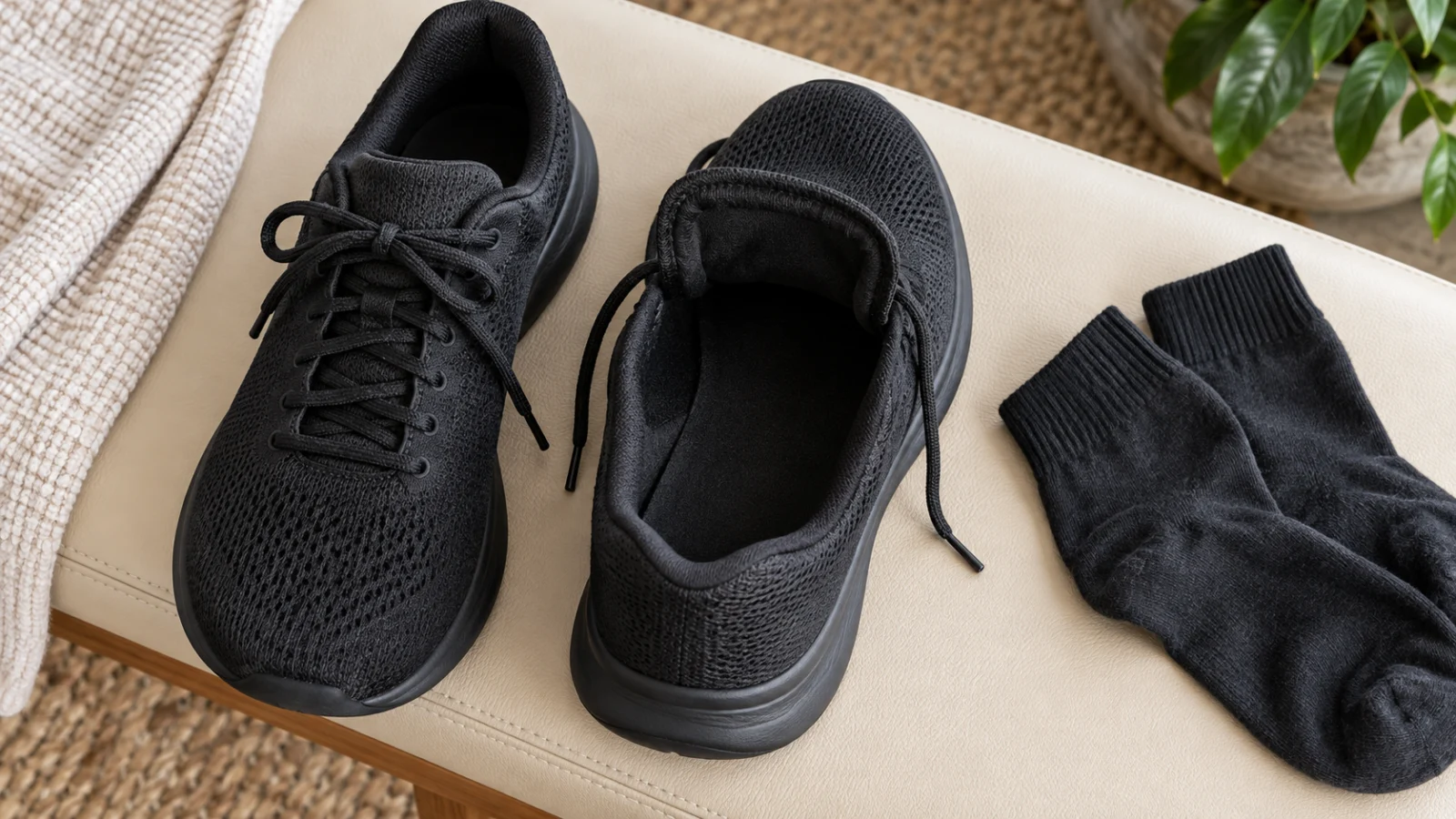
Try shoes on with the socks or prescribed inserts you expect to use. Walk in an appropriate trial area and notice pressure, slipping or discomfort. A size printed on a box does not establish that a particular shape fits your foot.
Check the whole fit
Look for a secure closure and a heel that does not slip excessively. Make sure the toe area allows comfortable movement rather than compression. Assess both feet, and do not assume that discomfort will necessarily disappear after purchase.
Consider the surface too. A sole should provide suitable traction for the planned setting without creating an unexpected catching hazard. Indoor floors, outdoor paths and wet surfaces differ. No shoe makes a cluttered route or unsuitable surface safe by itself.
Inspect what you already own
Examine tread, upper material and fastening parts for wear or damage. Check whether the shoe still fits comfortably. Do not base replacement solely on an arbitrary calendar interval when use and condition differ widely.
New or persistent foot pain deserves reassessment, not simply a more expensive purchase. Stop an activity that causes concerning symptoms and obtain appropriate advice. A footwear article cannot diagnose the cause or prescribe corrective equipment.
Separate information from promotion
Ask what evidence supports a performance or injury-prevention claim and whether it applies to your situation. A sponsored recommendation is not the same as an independent fitting assessment. This publication has not tested or ranked specific shoe models in this guide.
Key takeaway: suitable footwear should support the activity and fit the person. Choose through practical evaluation, maintain clear movement space and seek individual guidance when needed. Brand recognition and ambitious promises cannot replace those checks.
Sources & further reading
Source review: October 29, 2026. General educational information, not individualized medical advice, professional instruction or a clinical review. Follow appropriate individual guidance. Recipes are not kitchen-tested; timing and yields are estimates.