
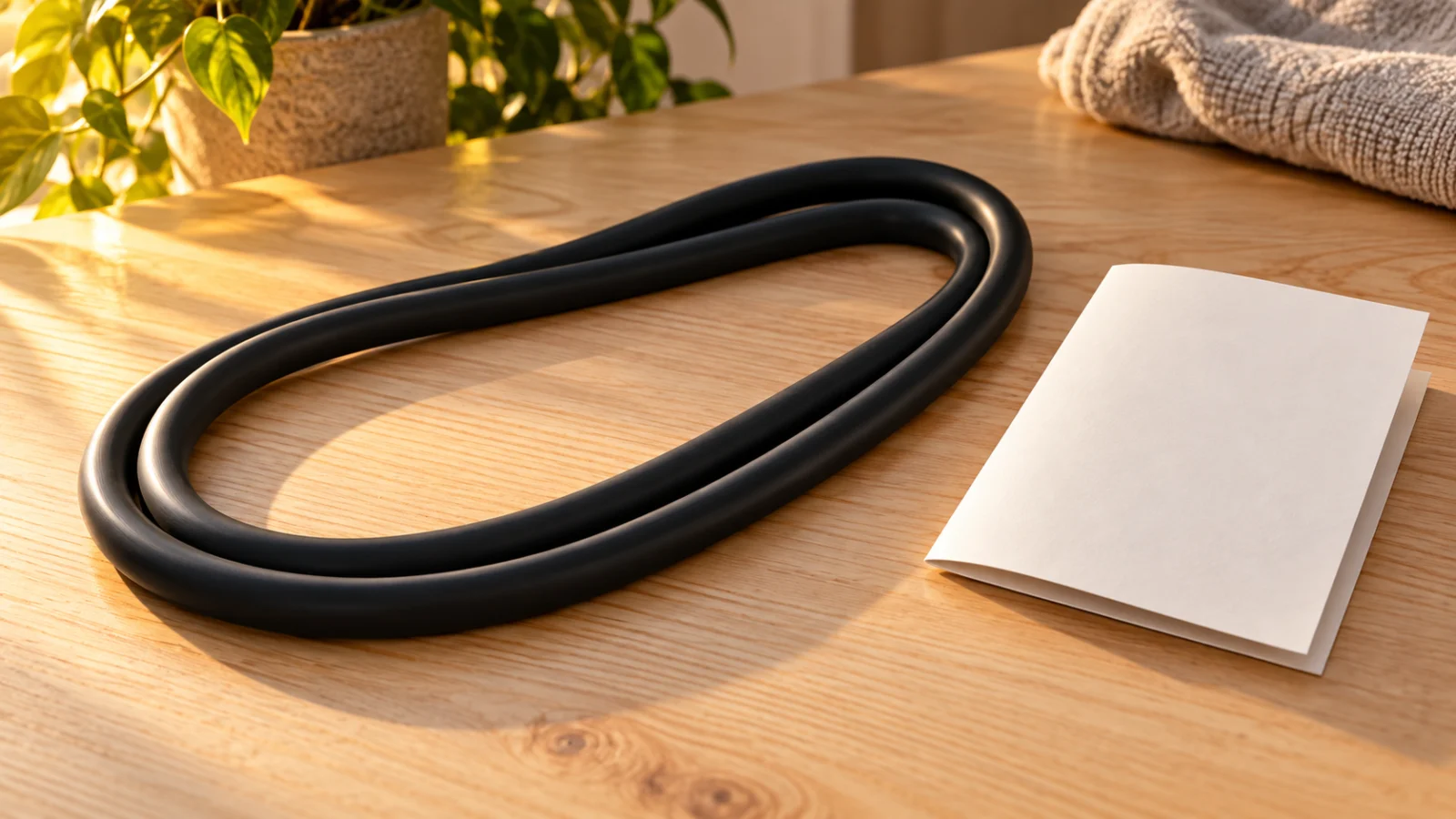
A resistance band can make home strength work convenient, but it introduces setup and recoil questions that deserve attention. A band is not automatically safer than a weight or appropriate for every exercise. This roughly twenty-minute planning session is for adults who already have suitable, correctly taught band movements. It does not teach a new anchored technique or replace an individualized rehabilitation plan.
Inspect before using
Follow the manufacturer's instructions and check the band for damage or wear. Confirm that the resistance, grip and any attachment are appropriate for the selected exercise. Do not improvise a door anchor or use an unknown fixing point. A damaged or uncertain setup should remain unused until resolved.
NHS resistance-band safety guidance emphasizes the importance of correct use in the context of a prescribed exercise plan. A band supplied for one rehabilitation movement should not be assumed suitable for every routine found online. Ask the relevant professional when an existing plan or condition affects your choices.
Select familiar actions only
Choose two or three band exercises you have already learned safely from a qualified source, using the exact supported setup. Record the name, resistance and any individual instruction. If you cannot explain the setup confidently, use the time to obtain instruction rather than experimenting under tension.
Spend several minutes on appropriate easy preparation. Perform one modest set of the first familiar exercise using the repetition range already suitable for you, then release tension in a controlled way and rest. Repeat that process with the next familiar action. Do not let the band snap back or direct a tensioned band toward the face.
Let rest and control set the pace
A second round is optional when the first remains comfortable and appropriate. The twenty-minute label includes checking equipment, preparation and rest; it is not a demand for continuous resistance work. Keep breathing and stop before technique deteriorates.
Stop for pain, dizziness or concerning symptoms and seek appropriate assistance. Do not interpret band color as a universal resistance standard across brands or replace a prescribed band with a different one without checking its suitability.
Store and review
Follow storage instructions and keep the equipment away from conditions that may damage it. Note any unresolved setup question before the next session.
Key takeaway: a useful band session begins with verified equipment and familiar, appropriate movements. If those dependencies are missing, the responsible next step is instruction—not an improvised exercise or a harder band.
Sources & further reading
Source review: October 29, 2026. General educational information, not individualized medical advice, professional instruction or a clinical review. Follow appropriate individual guidance. Recipes are not kitchen-tested; timing and yields are estimates.